
A hospital runs on machinery, equipment and linen. A bed with clean linen, a working suction machine, a sterile instrument tray and a clean kidney tray all look simple, but when any of these is missing or dirty, patient care suffers and infection spreads. A nurse is responsible for using, cleaning, storing and maintaining these things properly, and for asking for new supplies on time (indent) and keeping count of them (inventory). This chapter explains it all step by step.
Learning objectives: know the care and use of different equipment for client care in the hospital; illustrate the basic principles for cleaning shared patient care equipment; discuss the care of materials used in the hospital; and explain the maintenance of indent and inventory.
1. Meaning of Equipment
Machinery and equipment are essential and basic tools for hospital services, used every day for patient care.
Equipment refers to various devices, tools and instruments used in hospital and health care work.
2. Types of Equipment
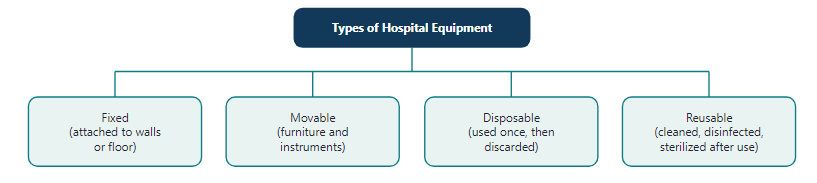
| Type | Meaning | Examples (added) |
|---|---|---|
| Fixed equipment | Attached to the walls or floor. | Oxygen and suction wall outlets, built-in lights |
| Movable equipment | Includes furniture and instruments. | Beds, trolleys, lockers, IV stand |
| Disposable equipment | Items used only once and discarded after use. | Syringes, gloves, IV sets |
| Reusable equipment | Items used for a very long time; cleaned, disinfected and sterilized before and after each use. | Forceps, scissors, kidney tray, bedpan |
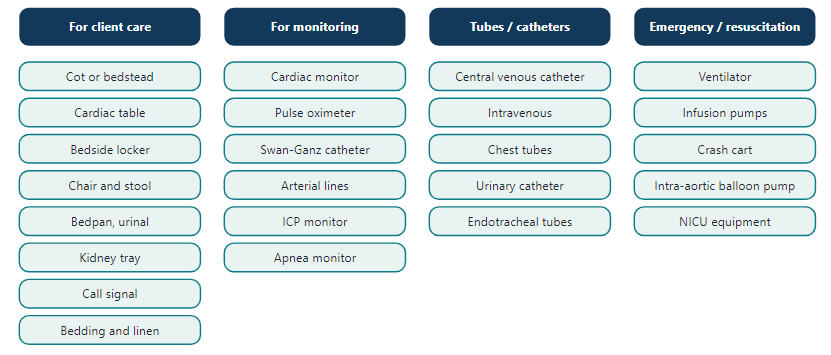
Classification of hospital equipment (by use)
Basic principles for cleaning shared (patient care) equipment
- All reusable equipment must be cleaned after contact with a patient before it is reused for another patient.
- If any equipment becomes visibly soiled, clean it immediately.
- Do not use tape over shared equipment, because it prevents proper cleaning.
- Assess the damage risk before decontaminating equipment with an appropriate disinfectant.
- If an equipment cover is used, cleaning still has to be done.
- In an outbreak situation, additional cleaning protocols are implemented.
3. Linen
Linen is a fabric made from fibres. It includes clothes, sheets, blankets and so on.
Importance of maintaining linen in the hospital
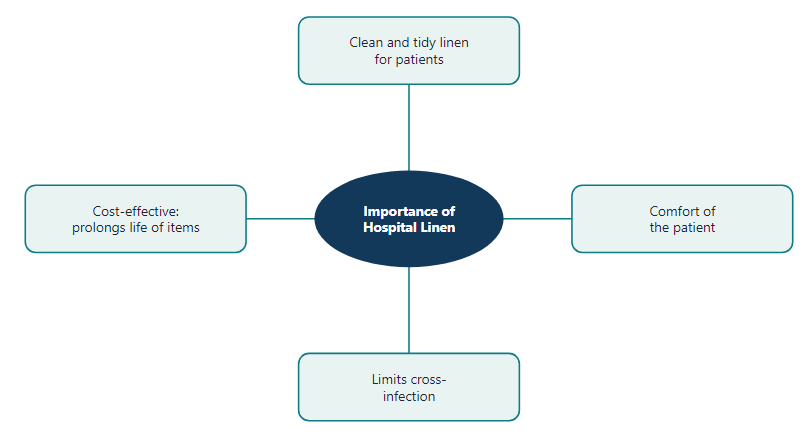
- To provide clean and tidy linen to patients.
- To provide comfort to the patient.
- To limit cross-infection.
- To make the hospital cost-effective by prolonging the life of the items.
Service quality standards for linen
- Linen must be stamped with the ward and hospital name.
- Wash all new articles before use.
- Keep damaged linen aside for repair, and remove stains before fixing.
- Send contaminated linen to the laundry early.
- Sort the linen carefully when it returns from the laundry, report any problems, and do accurate and frequent stock-taking to track lost items.
- Sort dirty linen when sending it to the laundry.
Care of linen
- Store clean linen in a cupboard and lock it when not in use.
- Maintain a stock register and check the stock at regular intervals.
- Take care that patients do not take linen home at discharge.
- Do not use torn linen; send it for mending.
- Do not place soiled or used linen on the floor.
- Send dirty linen regularly to the laundry for washing and ironing.
- Dry damp linen, and remove stains with an appropriate stain remover.
- Use a draw sheet and mackintosh to protect linen from stains.
- Disinfect linen used for infectious patients before sending it to the laundry.
- Teach the patient and family the importance of keeping hospital linen clean.
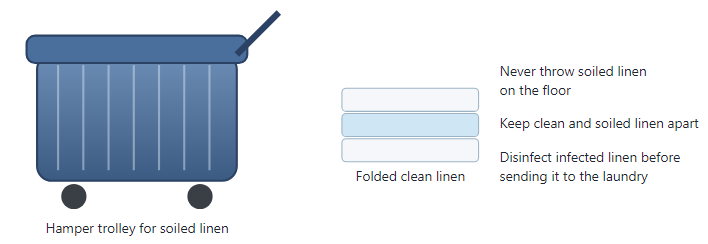
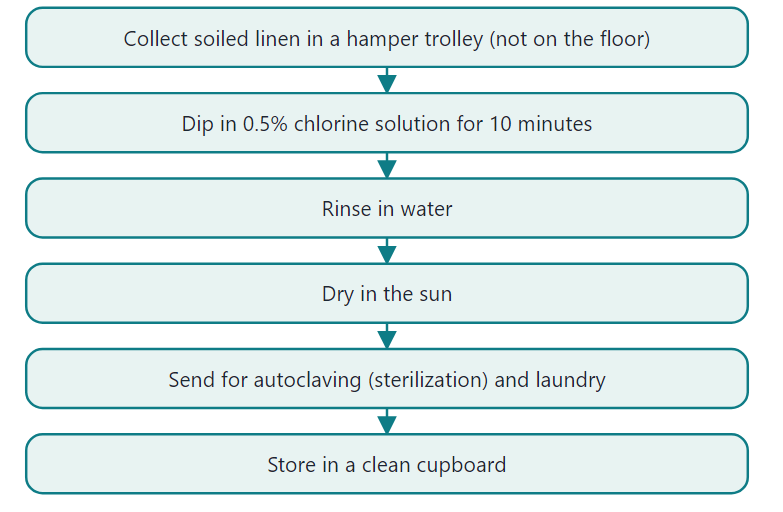
Disinfection of contaminated or soiled linen
Care of blankets, mattresses and pillows
| Item | Care |
|---|---|
| Blankets | Do not wash them (they shrink). Dust in an open place and dry in sunlight to disinfect. Do not expose to dust. Protect from moths using naphthalene balls and a dust-proof sheet while storing. |
| Mattresses and pillows | Prevent them from getting wet and soiled. Clean or brush regularly to prevent dust collection. Use washable covers. Disinfect by exposing to sunlight. If needed, wash under running cold water. |
Common stains and removal (added from standard sources)
| Stain | Removal |
|---|---|
| Blood | Soak in cold water (hot water fixes the stain), then wash with soap. |
| Urine, faeces | Rinse with cold water, then wash with soap and disinfect. |
| Iodine or tincture | Rub with alcohol or sodium thiosulphate solution, then wash. |
| Ink | Soak in milk or lemon juice with salt, then wash. |
| Grease or ointment | Apply a soap or detergent paste, wash in warm water. |
4. Rubber Goods
The care of rubber goods is very important. They include mackintosh (with air cushion), hot water bottles, tubes, ice caps, catheters, gloves, rectal tubes, ice collars and so on.
Purposes of care of rubber articles: preparing them for reuse by cleaning; stain removal; infection prevention; and preserving the life of the articles.
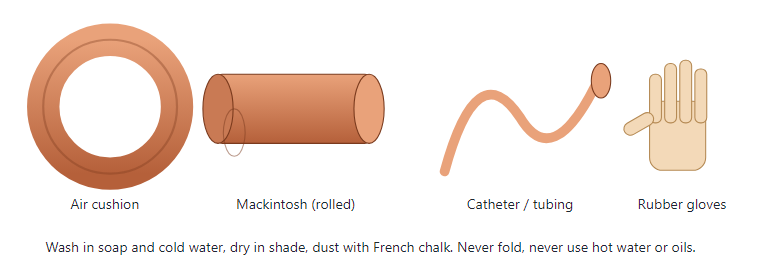
Basic principles for care of rubber articles
- Avoid hot water for cleaning, drying in direct sunlight, keeping near a radiator, use of hydrocarbons (kerosene, benzene, oils), sticking pins into rubber goods and using clamps on them.
- Avoid folding rubber sheets; roll them with paper or thin cloth lining after sprinkling powder.
- Store rubber items in wooden cupboards, in the dark.
- Dry them in shade after cleaning.
Storage and handling
- Always wash in soap and water, rinse and disinfect; then dry, dust with French chalk powder and roll or hang up, but never fold.
- Avoid dry heat, hot sun, turpentine oil, excessive steam and excessive boiling.
- Always separate the two rubber surfaces so they do not stick.
- Examine stored mackintosh weekly.
Cleaning and disinfecting rubber goods

- Spread on a flat surface, wet with cold water and rub the upper surface with soap and water using a clean cloth. Repeat on the other side.
- Wash both surfaces under running water; remove stains by an appropriate method.
- Disinfect with Lysol or Dettol (1:40).
- When dry, powder with French chalk, roll, and store in a dark, cool place.
Care of specific rubber items after use
| Item | Care |
|---|---|
| Mackintosh | Decontaminate by immersing in a tub of 0.5% chlorine, sodium hypochlorite or chlorhexidine. Spread on a flat surface, wet with water, apply soap with a clean cloth, wash away the soap. Repeat on the other side. Dry in shade on a dry horizontal surface, exposing both surfaces to air. When dry, powder lightly with dusting powder and roll with a paper lining. |
| Hot water bag, ice cap, air cushions, ice collar | Empty the contents. Clean the outside of the air cushion with soap and water (it may be soiled with faeces or urine). Wipe the outside of hot water bag, ice cap and collar with a clean damp cloth. Hang upside down for drip-drying. Blow some air in and close the cap or valve (to keep the two surfaces apart). Check for leakage before storing. Store in a cool, dry place. Send the cover for laundry. |
| Air or water mattress and pillows | Deflate and remove the cloth cover. Clean with a clean cloth and, if soiled, decontaminate with 0.5% sodium hypochlorite and let dry. Clean with soap and water on a flat surface. Dry in shade, exposing both surfaces to air. Inflate some air using a pump. Roll and store. |
| Gloves, tubes, catheters | Never reuse disposable items; discard appropriately. Oxygen tubes can be reused only for the same patient; discard if soiled with body fluids. |
| AMBU bag with face mask | Wipe the bag and rubber part of the face mask with a clean damp cloth. Disinfect with methylated spirit or 70% alcohol. |
5. Glassware
Glassware selected should be heavy, hard and resistant to heat and physical or mechanical trauma. Common glass items: test tubes, funnels, slides, specimen bottles, thermometers, ounce glasses and jars.
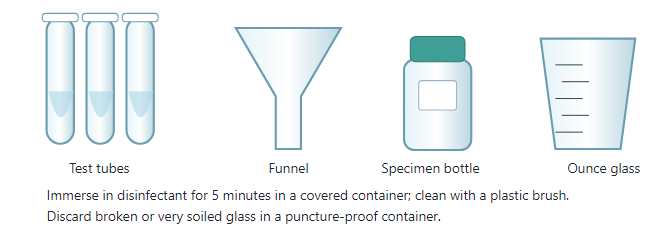
Care and cleaning of glassware
- Immerse the used glass item in disinfectant (the slide says 5% savlon) for 5 minutes in a covered container.
- Clean tubes and jars with a plastic brush.
- Clean patients’ utensils with a soapy solution.
- If items are soiled or very contaminated, discard them in a puncture-proof container.
Care of thermometer
- Before use, remove the thermometer from the antiseptic solution and wipe it from bulb to stem.
- After use, clean from stem to bulb in a circular motion with a wet soapy cotton ball.
- Rinse by holding the stem and bulb facing downward under running water.
- Dip in a disinfectant solution as per policy.
- Store dry in its container and screw the cap.
- For electronic thermometers, use a disposable sleeve and wipe the probe with 70% alcohol.
- Lotion thermometers can be wiped with a dry cotton swab before keeping them in the container.
6. Metal Items
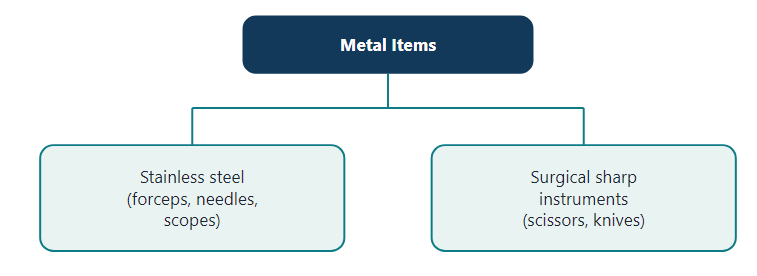
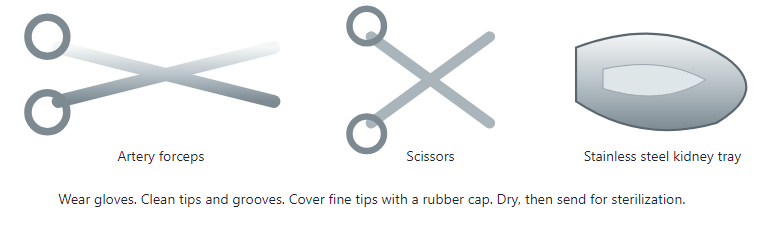
A. Stainless steel instruments
- Suitable for almost all purposes; easy to clean; resistant to heat; hard to break. Examples: forceps, needles, scopes, sharp instruments.
- They are heat resistant, anticorrosive and long lasting but expensive, so handle properly.
- Avoid repeated boiling (they get dull). They are easily sterilized by chemicals and by autoclaving.
Cleaning steps:
- Wear gloves while handling these items (and while washing soiled or contaminated items).
- Dip items in chlorine solution (the slide says 5%) for 5 to 6 minutes, then wash under running water.
- Make sure that tips, toothed ends and grooves of forceps are cleaned properly.
- Cover fine-tip instruments with a hard rubber cap. After drying, send for sterilization.
Caution: The slides write “5% chlorine” for dipping instruments and glass. In many hospitals the standard working solution is 0.5% chlorine (about 1:10 dilution of a 5% stock). For the exam write what your textbook says, but in the ward always follow your hospital’s infection control policy and the manufacturer’s dilution chart.
B. Surgical sharp instruments
- Commonly used: scissors and knives.
- Sharpness becomes rough after overuse, exposure to moisture and high temperature.
- Sterilization is done in a hot air sterilizer at 160 C for 1 hour.
7. Plastics
Plastic items used in hospital: bowl, bedpan, urinal, kidney tray, syringes, basin, airways and connectors.
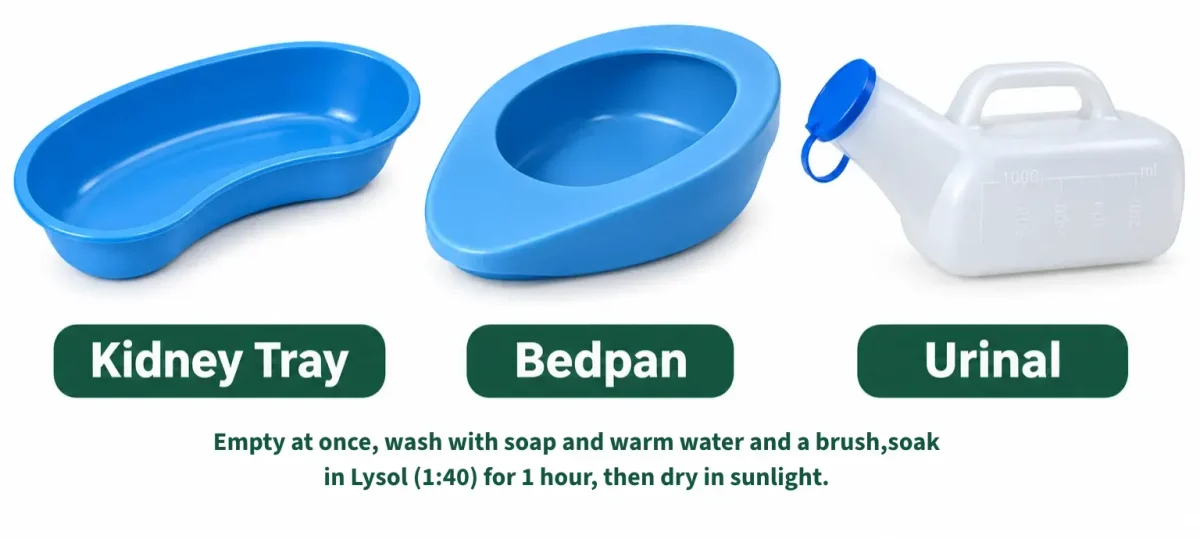
Basic nursing care of plastic items
- Discard the contents and empty the kidney tray, bedpan or urinal immediately.
- Wash under running water, then clean with soap and warm water using a brush.
- For disinfection, soak in Lysol (1:40) for one hour.
- Place in direct sunlight for a few hours to dry.
8. Furniture
Furniture means portable objects of different types, made of wood or metal.
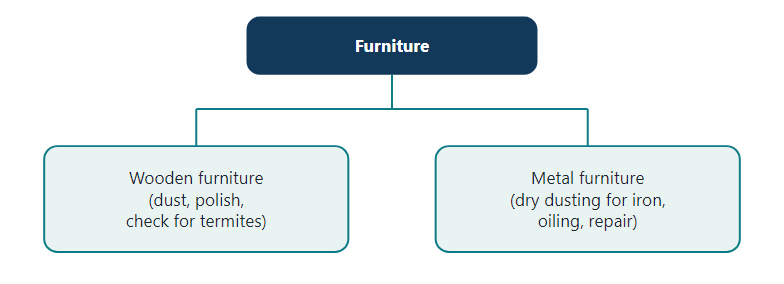
Care and maintenance of furniture
- Keep furniture dust free.
- Use glutaraldehyde or savlon solution for disinfection; wash with soap and water.
- Clean beds daily.
- After a patient is discharged, disinfect all equipment and items such as trolleys, lockers and IV stands.
- Use dry dusting for iron furniture.
- Do regular oiling and repairing of all furniture.
- Maintain a stock record of furniture and send old and damaged furniture for condemnation procedure.
Importance of furniture maintenance: longevity of furniture, prevention of cross infection, a good environment for the client’s recovery, and an improved ambience of the patient’s unit.
9. Machinery
Machinery includes suction apparatus, defibrillator, nebulizer machine and other machines that use electric current.
Nursing care and maintenance of machinery
- Never leave the power ON; switch OFF the equipment when not in use.
- Clean the equipment and its parts with a soft wet cloth.
- Change suction apparatus tubing every 24 hours.
- Inspect the functioning of equipment before using it.
- Keep all equipment in a safe, appropriate place, ready for use.
- Do not keep food items, expired medicines, opened medications or unused blood samples in the refrigerator.
(Added: report any fault immediately, keep a log book of machine maintenance, and never use equipment with exposed wires or damaged plugs.)
10. Indent
Indent is the list of items that are not available in stock. The record is kept in a register called the indent book.
| Model Indent Book (Name of the Hospital, Name of the Ward, Date, Year and Time) | |||
|---|---|---|---|
| S. No. | Items | Quantity | Indent issued |
| 1 | (example) Bed sheets | 10 | |
| Signature of the in-charge | |||
11. Inventory
Inventory is a list of different articles with their characteristics and the standard number.
Inventory control is the process of maintaining the optimum number of items adequate for the smooth running of an organization.
Purposes and uses of maintaining ward inventory
- Smooth operation of the ward and maximum material supply.
- Flexibility between the availability of materials and the actual demand for them.
- Inspecting the functioning of articles, and ordering repair or replacement if needed.
- Reduction in financial investment and better handling of unforeseen circumstances.
- Checking the functioning level of different articles.
- Replacing articles in their place.
- Avoiding missing articles, and keeping an inspection on the articles.
How to keep inventory (added): make a list of all items in the ward, count them at fixed times (for example every shift or weekly), compare with the standard number, record shortages, indent for the missing items, and have the in-charge sign the register.
12. Maintenance of Equipment
Maintenance is the set of activities done to keep equipment in optimum working condition. It consists of routine inspection and maintenance practices.
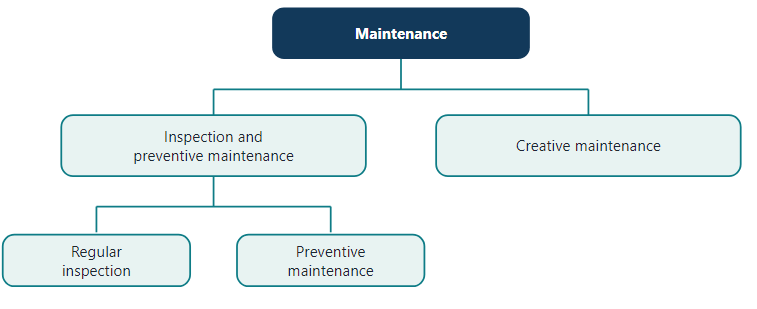
- Inspection and preventive maintenance: regular inspection and preventive servicing to stop breakdown.
- Creative maintenance: improving or modifying the equipment to make it work better.
- Procurement: buying or getting the equipment.
- Inventory: recording and counting it.
- Maintenance: keeping it in working order.
- Condemnation: removing old and damaged articles that cannot be repaired, through the official procedure (added: with a written report and approval from the authority, and recording in the stock register).
Chapter Focus Points
- Health care services depend on many materials. A health worker must ensure regular and adequate supply of equipment and monitor the quality and safety of materials, including care of articles, storage, checking, indenting and inventory control.
- Knowledge and skills about equipment, devices, medicines and procedures are applied to solve health problems and improve quality of life.
Quick Revision Points
- Equipment: fixed, movable, disposable, reusable.
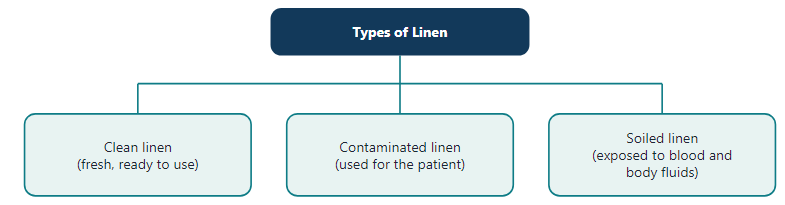
- Linen types: clean, contaminated, soiled. Disinfect soiled linen in 0.5% chlorine for 10 minutes.
- Blankets: do not wash; dust and sun-dry; naphthalene balls.
- Rubber goods: soap and cold water, Dettol 1:40, dry in shade, French chalk, roll, never fold, store in dark.
- Glass: 5 minutes in disinfectant, plastic brush, puncture-proof container.
- Surgical sharps: hot air oven at 160 C for 1 hour.
- Plastics: Lysol 1:40 for 1 hour, then sun dry.
- Suction tubing: change every 24 hours.
- Indent = items not in stock. Inventory = list of articles with standard number.
- Maintenance cycle: procurement, inventory, maintenance, condemnation.
Machinery, Equipment and Linen MCQs
Q1. Equipment attached to walls or floor is:
- Fixed equipment
- Movable equipment
- Disposable equipment
- Reusable equipment
Answer: A. Example: oxygen and suction outlets (added).
Q2. Furniture and instruments are examples of:
- Fixed
- Movable
- Disposable
- Condemned
Answer: B. Movable equipment.
Q3. Items used only once and then discarded are:
- Reusable
- Disposable
- Fixed
- Movable
Answer: B. Example: syringes, gloves.
Q4. Reusable equipment is cleaned, disinfected and sterilized:
- Never
- Before and after each use
- Only yearly
- Only when broken
Answer: B. As per the chapter.
Q5. Which equipment is used for monitoring?
- Cardiac monitor
- Bedpan
- Cot
- Locker
Answer: A. Others: pulse oximeter, ICP monitor, apnea monitor.
Q6. Crash cart and ventilator are:
- Emergency and resuscitation equipment
- Furniture
- Linen
- Rubber goods
Answer: A. Part of equipment classification.
Q7. Reusable shared equipment must be cleaned:
- After contact with the patient, before reuse for another patient
- Weekly
- Monthly
- Never
Answer: A. Principle of shared equipment.
Q8. Using tape over shared equipment is:
- Recommended
- Not recommended because it prevents proper cleaning
- Compulsory
- Required for ICU
Answer: B. As per the principle.
Q9. Linen is a fabric made from:
- Fibres
- Metal
- Plastic
- Glass
Answer: A. Includes clothes, sheets and blankets.
Q10. Which is NOT a type of linen?
- Clean linen
- Contaminated linen
- Soiled linen
- Condemned furniture
Answer: D. Three types.
Q11. Linen exposed to blood and body fluids is:
- Clean
- Contaminated
- Soiled
- New
Answer: C. Contaminated linen is linen used for the patient.
Q12. Linen should be stamped with:
- Ward and hospital name
- Patient name
- Doctor name
- Date of purchase only
Answer: A. A service quality standard.
Q13. Before use, new linen should be:
- Washed
- Burnt
- Ironed only
- Stored unwashed
Answer: A. Wash all new articles.
Q14. Soiled linen should be placed:
- On the floor
- In a laundry box or hamper trolley
- On the bed
- In the corridor
Answer: B. Never on the floor.
Q15. Soiled linen is dipped in how much chlorine solution for 10 minutes?
- 0.05%
- 0.5%
- 5%
- 50%
Answer: B. Then rinse, sun dry and autoclave.
Q16. Blankets should NOT be:
- Dusted
- Washed (they shrink)
- Sun-dried
- Stored with naphthalene balls
Answer: B. Dust in the open and sun-dry.
Q17. Moth protection for blankets uses:
- Naphthalene balls
- Chlorine
- Spirit
- Soap
Answer: A. Cover with a dust-proof sheet.
Q18. Mattresses and pillows are disinfected by:
- Exposing to sunlight
- Boiling
- Burning
- Freezing
Answer: A. Use washable covers.
Q19. Rubber goods include:
- Hot water bottles, ice caps, catheters
- Test tubes
- Forceps
- Beds
Answer: A. Also mackintosh, gloves, tubes.
Q20. Rubber articles should be stored in:
- Wooden cupboards, in the dark
- Sunlight
- Near a radiator
- Plastic bags in the sun
Answer: A. Avoid heat.
Q21. Rubber sheets should be:
- Folded tightly
- Rolled with paper or thin cloth lining after powdering
- Hung in sun
- Boiled
Answer: B. Never fold.
Q22. The powder used on rubber goods is:
- French chalk
- Wheat flour
- Salt
- Sugar
Answer: A. Prevents sticking.
Q23. Disinfection of rubber goods is done with Lysol or Dettol at:
- 1:4
- 1:40
- 1:400
- 1:4000
Answer: B. Slide says 1:40.
Q24. Disposable gloves and tubes should be:
- Reused
- Never reused and discarded appropriately
- Washed and reused
- Autoclaved and reused
Answer: B. Oxygen tubes may be reused only for the same patient.
Q25. AMBU bag and face mask are disinfected with:
- 70% alcohol or methylated spirit
- Water only
- Kerosene
- Dry heat
Answer: A. Wipe the bag and rubber part first.
Q26. Glassware should be:
- Heavy, hard and heat resistant
- Thin and soft
- Coloured
- Plastic coated
Answer: A. Resistant to trauma.
Q27. Used glass items are immersed in disinfectant for:
- 1 minute
- 5 minutes
- 2 hours
- 1 day
Answer: B. In a covered container (slide: 5% savlon).
Q28. Very soiled or broken glass is discarded in a:
- Puncture-proof container
- Open bin
- Sink
- Flower pot
Answer: A. To prevent injuries.
Q29. Stainless steel instruments should avoid:
- Repeated boiling (they get dull)
- Gloves
- Autoclaving
- Washing
Answer: A. They are anticorrosive and long lasting.
Q30. Surgical sharp instruments are sterilized in a hot air sterilizer at:
- 100 C for 10 minutes
- 160 C for 1 hour
- 200 C for 5 minutes
- 60 C for 1 day
Answer: B. As per the chapter.
Q31. Plastic items such as kidney tray should be soaked in Lysol (1:40) for:
- 1 hour
- 1 minute
- 1 day
- No soaking
Answer: A. Then dry in sunlight.
Q32. Machinery includes:
- Suction apparatus, defibrillator, nebulizer
- Bedpan
- Linen
- Mackintosh
Answer: A. Machines using electric current.
Q33. Suction apparatus tubing should be changed every:
- 24 hours
- 1 hour
- 1 month
- 1 year
Answer: A. Also switch OFF when not in use.
Q34. Which should NOT be kept in the ward refrigerator?
- Expired medicines and food items
- Vaccines in the vaccine box
- Insulin (as per policy)
- None
Answer: A. Also opened medications and unused blood samples.
Q35. A list of items not available in stock is the:
- Indent
- Inventory
- Census
- Kardex
Answer: A. Recorded in the indent book.
Q36. A list of articles with characteristics and standard number is:
- Inventory
- Indent
- Census
- Audit
Answer: A. Inventory control keeps the optimum number.
Q37. The equipment maintenance cycle is:
- Procurement, inventory, maintenance, condemnation
- Admission, discharge, transfer
- Plan, do, check, act
- Input, output, feedback
Answer: A. Fig. 4 of the textbook.
Q38. Preventive maintenance means:
- Regular servicing to prevent breakdown
- Repair after breakdown
- Buying new items
- Throwing items
Answer: A. Part of inspection and preventive maintenance.
Important Questions as per INC Syllabus Pattern
Long answer questions (10 to 15 marks)
- Define equipment. Classify hospital equipment and describe the basic principles for cleaning shared equipment.
- Describe the care of linen in the hospital, including disinfection of contaminated linen.
- Explain the care and storage of rubber goods.
- Describe the care of glassware, metal items and plastics.
- Explain indent and inventory and the equipment maintenance process.
Short answer questions (5 marks)
- Types of equipment
- Importance of maintaining linen
- Service quality standards for linen
- Care of blankets, mattresses and pillows
- Care of mackintosh
- Care of thermometer
- Cleaning of stainless steel instruments
- Care and maintenance of furniture
- Nursing care of machinery
- Purposes of maintaining ward inventory
Very short answer questions (2 marks)
- Define equipment.
- Define linen.
- What is an indent book?
- Define inventory control.
- Differentiate disposable and reusable equipment.
- Name four rubber goods.
- Write the temperature and time for sterilizing sharp instruments.
- What is condemnation?
Also read:
CHAPTER 1: Introduction to Health and Illness, Nursing Foundation Unit 1 Notes PDF
CHAPTER 2: Health Care Delivery System, Nursing Foundation Unit 2 BSc Nursing Notes
Chapter 3: Nursing as a Profession and History of Nursing in India: BSc Nursing 1st Semester Notes (Nursing Foundation)
CHAPTER 4: Hospital Admission and Discharge: Complete BSc Nursing Notes | 1st Semester Notes (Nursing Foundation)
CHAPTER 5: Communication and Nurse Patient Relationship: Complete Notes | BSc Nursing 1st Semester Notes (Nursing Foundation)
Chapter 6: Patient Education in Nursing: Notes for BSc Nursing 1st Semester, Nursing Foundation Notes with MCQs & Important Questions
Chapter 7: The Nursing Process: Complete Notes for BSc Nursing, 1st Semester, Nursing Foundation
Chapter 8: Documentation and Reporting: Notes with MCQs and Important Questions for BSc Nursing 1st Year, Nursing Foundation Notes
Vital Signs: Assessment & Regulation Complete Notes for Nursing With MCQ and Important Questions