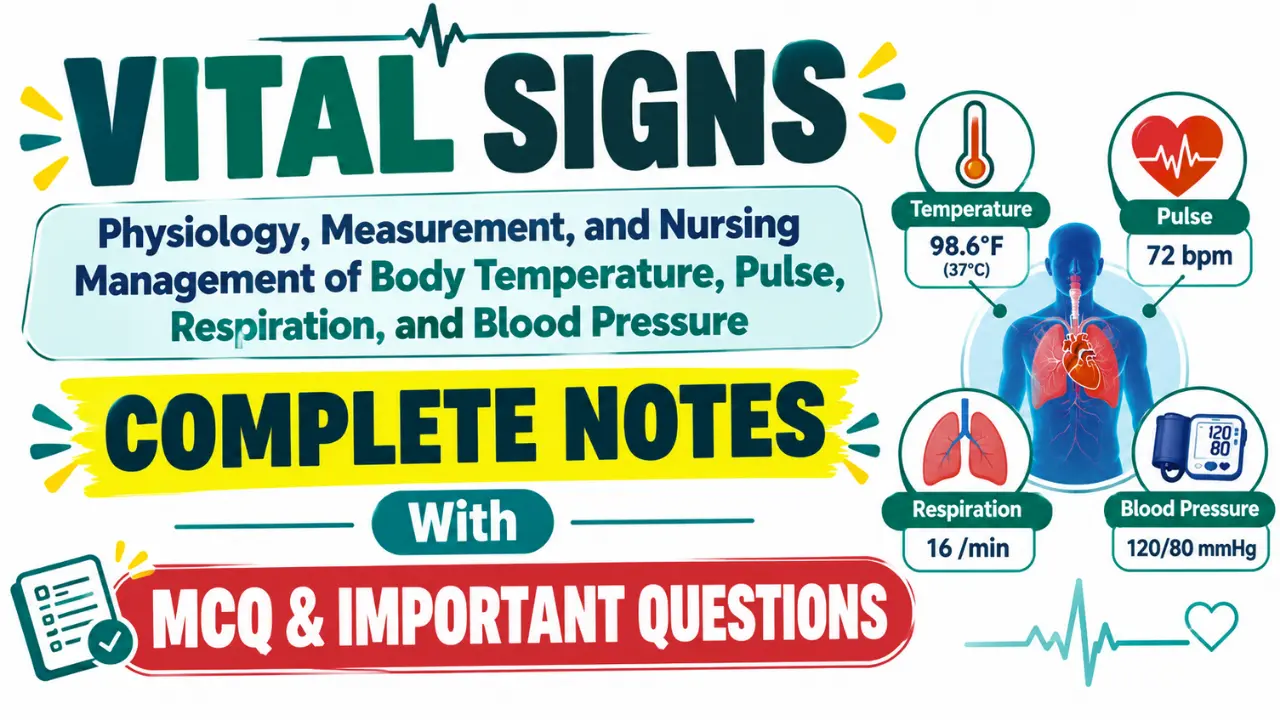

Vital signs are the quickest and simplest way to know how the patient’s body is working. Every nurse measures them many times a day, and a small change in temperature, pulse, respiration or blood pressure can warn us about a big problem. In this chapter we study each vital sign: physiology, regulation, factors, normal ranges, assessment and alterations. Because the chapter also covers fever, hypothermia, and their management, we also study hot and cold applications with procedure steps.
Learning objectives: explain how temperature, pulse, respiration and blood pressure are regulated; list factors affecting them; recognize assessment sites; assess them accurately; recall normal ranges at different life stages; and teach patients to measure BP and pulse at home.
Introduction and Purposes of Vital Signs
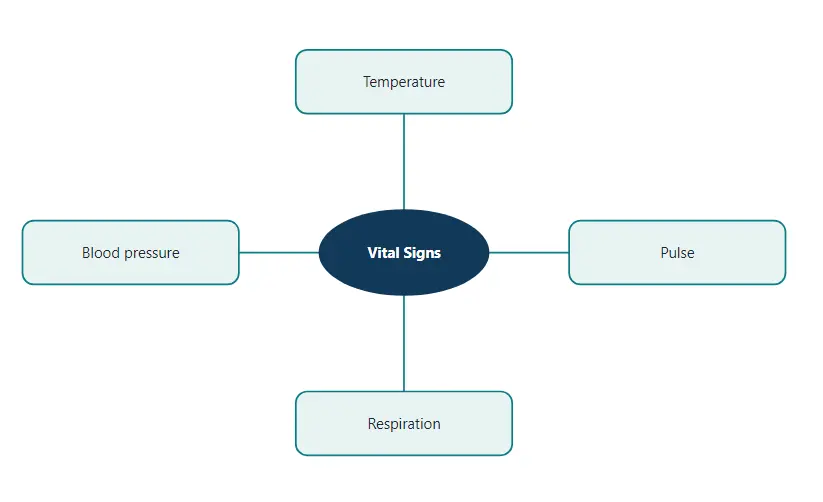
Vital signs are an important part of patient assessment because they give baseline data about the condition and functioning of the patient’s body. They include monitoring of body temperature, pulse, respiration and blood pressure.
Purposes of vital signs monitoring:
- The quickest and easiest way to monitor the patient’s condition and identify problems.
- Helpful in nursing assessment and acts as a base for planning care.
- Discharge planning is also based on stabilization of the patient’s vital signs.
Guidelines for taking vital signs (added from standard sources): wash hands and explain the procedure; use the same equipment and site each time for comparison; know the patient’s usual (baseline) values; take them when the patient is calm, not right after exercise, bath or meals; check equipment before use; record immediately; and report abnormal values at once.
Body Temperature
Body temperature is the balance between the heat production and heat loss from the human body. Body heat is measured in degrees.
Purposes of measuring body temperature: to have baseline data about the patient; to assess the patient’s condition; and to determine the effectiveness of treatment.
Core and surface temperature
| Core body temperature | Surface temperature |
|---|---|
| Temperature of the body’s internal organs such as the heart, liver, brain and blood. Normal range: 36.5 to 37.5 C. | Temperature of the outermost surface of the body; it changes with the external environment. Normal range is wide: 97 F (36.1 C) to 99 F (37.2 C). |
Regulation of body temperature
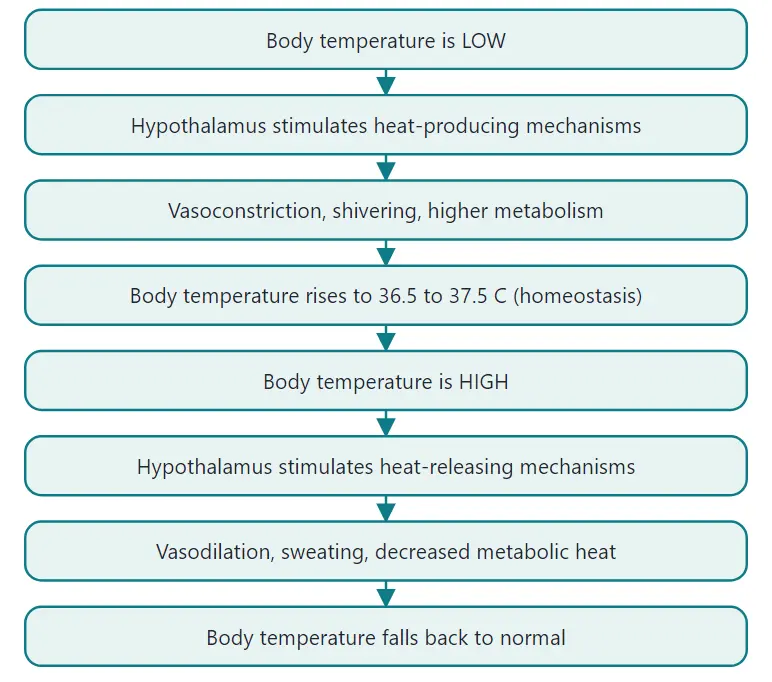
The hypothalamus works like a thermostat. Temperature receptors send messages to it. When the body is cold, it starts heat-producing mechanisms; when the body is hot, it starts heat-releasing mechanisms. This is a negative feedback system.
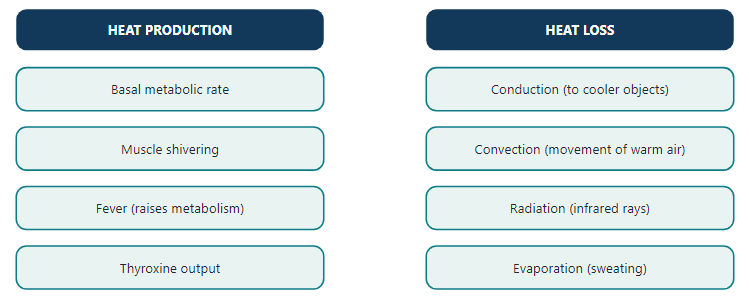
| Heat production | Heat loss |
|---|---|
| Basal metabolic rate: rate of energy used to maintain essential body activities. Muscle shivering: increases the metabolic rate. Fever: increases the metabolic rate, hence temperature. Thyroxine output: increases the metabolic rate. | Conduction: heat lost to objects cooler than the skin (bathing in cold water). Convection: movement of warm matter away from the body (warm air moving to cooler places). Radiation: heat lost as infrared rays without physical contact. Evaporation: heat lost from the skin as sweat evaporates. |
Factors affecting body temperature
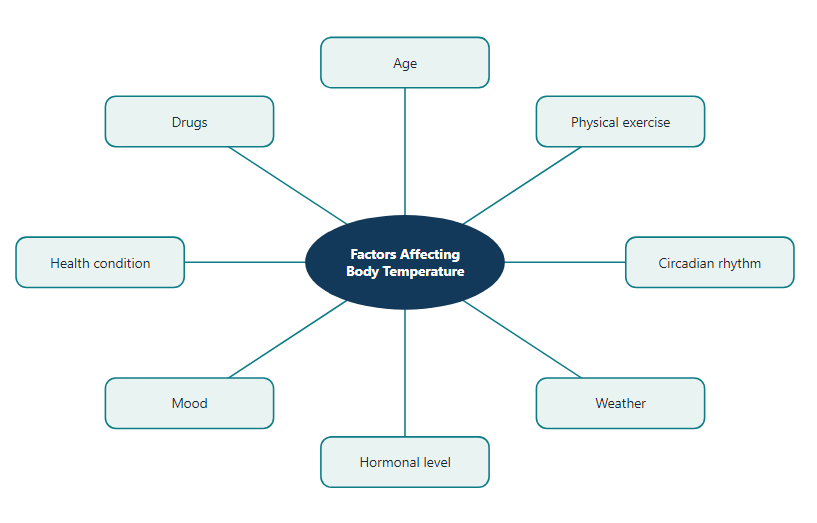
| Factor | Effect |
|---|---|
| Age | Neonates and aged persons cannot maintain their body temperature well and are more prone to hypothermia. |
| Physical exercise | More exercise means more heat production and a higher temperature. |
| Circadian rhythm | Temperature varies with time of day: higher during the day (environment and activity) and lower at night and in the early morning. |
| Weather | Extremes of weather change body temperature. Hot weather raises it. |
| Hormonal level | Progesterone raises body temperature by about 0.5 to 1.0 F during ovulation. |
| Mood | Excitement or joy can raise temperature. |
| Health condition | Most infections raise temperature, but sepsis may cause a high or low temperature. |
| Drugs | Beta blockers may lower temperature; thyroid hormone drugs may raise it. |
Assessment of body temperature: equipment
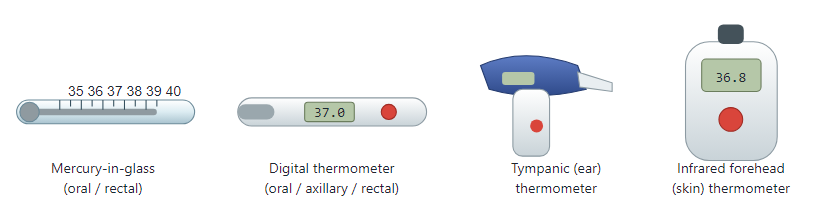
- Mercury glass thermometer: oral type and rectal type.
- Electronic or digital thermometer.
- Tympanic membrane thermometer (ear).
- Sensor touch (skin) thermometer (for example forehead).
- Disposable single-use thermometer.
- Automated monitoring devices.
Factors affecting site selection: patient’s age, state of consciousness, amount of pain, and type of treatment being provided.
Sites and methods (technique added from standard sources)
| Site | Technique and notes | Usual normal value |
|---|---|---|
| Oral | Place the thermometer tip under the tongue in the posterior sublingual pocket (beside the frenulum), lips closed, for about 3 minutes (glass) or until the digital beep. Avoid after hot or cold drinks, smoking. Not for unconscious, confused, young children or after oral surgery. | About 37 C (98.6 F) |
| Axillary | Dry the axilla, place the tip in the centre, arm pressed across the chest, for about 5 to 10 minutes (glass). Safe and common for infants and children but less accurate. | About 36.5 C (97.6 F) |
| Rectal | Lubricated tip inserted 1 to 1.5 inches (adults) with patient in side-lying (Sims’) position, held for 2 to 3 minutes. Avoid in diarrhoea, rectal surgery, cardiac patients and neutropenia. | About 37.5 C (99.6 F) |
| Tympanic | Pull the pinna up and back (adults) and place the probe gently in the ear canal pointing to the eardrum. Quick; not for ear infection or excess wax. | About 37 C |
Celsius and Fahrenheit conversion
F = (C x 9/5) + 32 and C = 5/9 x (F – 32)
| C | F | C | F |
|---|---|---|---|
| 34.0 | 93.2 | 39.0 | 102.2 |
| 35.0 | 95.0 | 40.0 | 104.0 |
| 36.0 | 96.8 | 41.0 | 105.8 |
| 37.0 | 98.6 | 42.0 | 107.6 |
| 38.0 | 100.4 | 43.0 | 109.4 |
(Conversion values are calculated from the formula; the textbook slide shows a similar table.)
Alterations in Body Temperature
| Condition | Description |
|---|---|
| Pyrexia or hyperthermia | Temperature more than the normal range. |
| Hypothermia | Temperature less than the normal range. |
| Hyperpyrexia | Very high fever, above 106 F (41.1 C) as per the types-of-fever slide. (One slide misprints it as 105 C.) |
Fever (pyrexia)
Fever is body temperature above the normal range. Causes: substances like bacteria and viruses (pyrogens), and chemicals produced in the body after tissue injury, for example myocardial infarction.
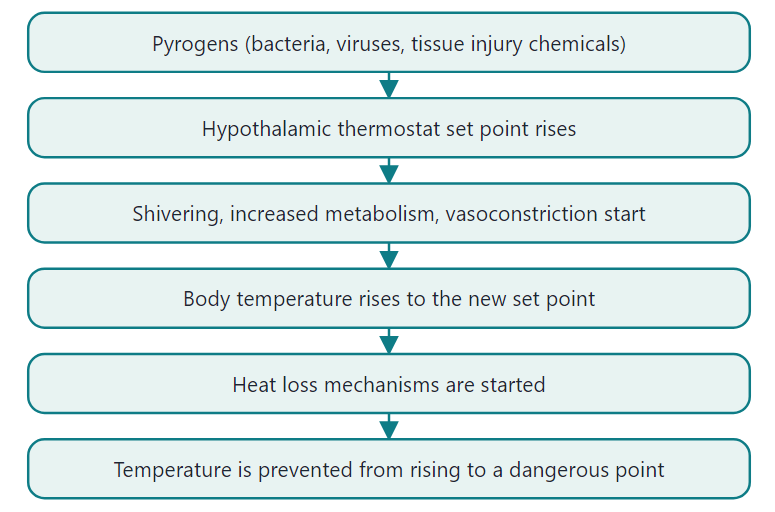
Clinical manifestations of fever: loss of appetite, headache, hot dry and flushed skin, thirst, muscle aches, fatigue, increased pulse and respiratory rate, and sometimes confusion and delirium in the elderly. (Added: stages of fever are onset or chill, course or plateau, and defervescence.)
Types of fever
| Type | Description |
|---|---|
| Intermittent | Temperature rises and falls at regular intervals, even to subnormal. Mostly in malaria. |
| Remittent | Morning and evening difference is more than 2 C and never comes to normal. |
| Relapsing | A period of fever followed by normal temperature for 24 to 48 hours. |
| Constant (continuous) | Always above normal with very little fluctuation (1 to 2 degrees). Mostly in typhoid. |
| Inverse | Temperature higher in the morning and lower in the evening. |
| Rigor | Sudden shivering with cold, accompanied by raised body temperature and sweating. |
| Low-grade | 99.5 F (37.5 C) to 100.3 F (38.3 C). |
| Moderate-grade | Above 102.2 F up to 104 F (39.1 to 40 C). |
| High-grade | 104 F (39.4 C) or above. |
| Hyperpyrexia | Above 106 F (41.1 C). |
| Acute / Sub-acute / Chronic | Less than 7 days / up to 14 days / more than 14 days. |

Management of the rigor stages
| Cold stage | Hot stage | Sweating stage | |
|---|---|---|---|
| Patient experiences | Cold, shivering, feeble and rapid pulse, cool and pale skin | Uncontrolled fever, thirst, hot dry skin, malaise, drowsiness, restlessness | Profuse sweating, reduced shivering, fluid deficiency |
| Nursing considerations | Monitor vitals; restrict activity; provide blankets and hot drinks; give oxygen as prescribed | Monitor vitals; restrict activity and promote rest; remove extra clothing; give cold fluids and tepid sponging; apply lubricants; give antipyretics as prescribed | Monitor vitals and intake output; change wet clothes; promote rest; give fluids and electrolytes as prescribed |
Hyperthermia and its complications
Hyperthermia is a raised body temperature mainly due to failure of thermoregulation, leading to an uncontrolled rise in temperature.
| Heat cramps | Heat exhaustion | Heat stroke | |
|---|---|---|---|
| Cause | Dehydration and low sodium | Dehydration and over-exertion | Imbalance in the body’s thermoregulation |
| Signs | Painful muscle cramps, profuse sweating | Temperature 100.4 to 104 F (38 to 40 C), thirst, nausea, vomiting, weakness, disorientation, profuse perspiration | Hot dry skin, temperature above 104 F, confusion, delirium, abdominal distress, visual disturbance, loss of consciousness |
| Management | Pressure on muscles, sips of water, ice packs, sodium replacement | Loosen clothes, cool sponge or bath, sips of water | Cool clothes or bath; do not give anything by mouth if the person is not fully alert |
Hypothermia
Hypothermia is a body temperature below the lower limit of normal. It happens when the body’s heat-producing and heat-retaining responses are overwhelmed by unprotected exposure to cold. Risk factors: age (neonates, elderly), acute and chronic conditions, endocrine disorders, postoperative patients and neurological disorders.
| Type | Body temperature | Clinical manifestations |
|---|---|---|
| Mild | 90 to 95 F | High BP, shivering, increased respiratory and pulse rate, nausea, fatigue, impaired judgement, slurred speech, poor coordination |
| Moderate | 82.4 to 90 F | Decreased heart and respiratory rate, altered consciousness, significant confusion, dilated pupils, low BP, decreased reflexes |
| Severe | Below 82.4 F | Stops shivering, difficulty breathing, weak pulse, non-reactive pupils, heart failure, pulmonary edema, apathy, cardiac arrest |
Treatment: internal (core) rewarming and external rewarming, which can be passive (blankets, warm room) or active.
Nursing management: assess body temperature and the pattern, extent and course of the problem. Nursing diagnosis: Hypothermia related to illness as evidenced by decrease in body temperature. Interventions: reassess temperature; rewarm by covering the patient with adequate layers of clothes and blankets; give warm fluids.
Hot Applications
Hot application: applying a warmer agent, in moist or dry state, to the body to relieve pain or provide warmth.
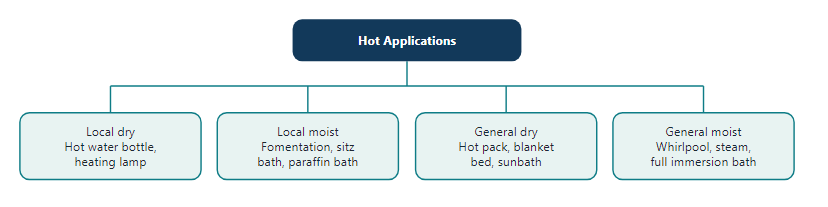
| Indications | Contraindications |
|---|---|
| Pain, muscle stiffness, menstrual cramps, constipation, congestion, hypothermia | Cancer, paralysis, open wounds, impaired liver, heart and renal function, very young and very old age group |
A. Hot water bottle (local dry heat)
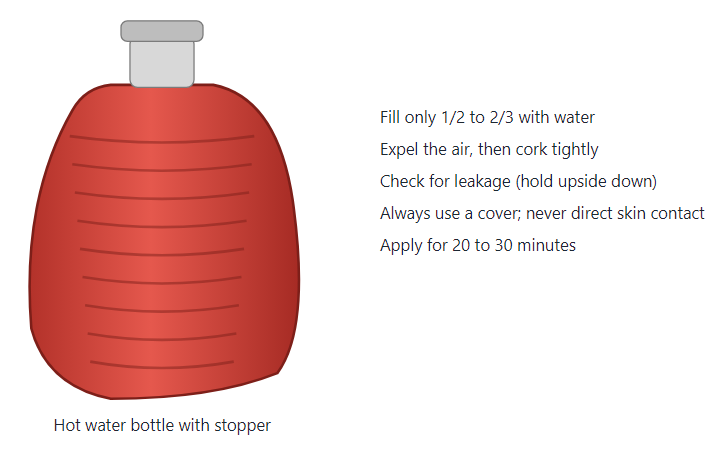
The most common method of applying dry heat for therapeutic and comfort purposes. Indications: to relieve pain in backache, dysentery and dysmenorrhea; to relieve local muscle spasm; to reduce inflammation and congestion; to relieve retention of urine.
| Step | Rationale |
|---|---|
| Wash hands. Screen the patient. | Prevent infection; maintain privacy. |
| Mix hot and cold water and check the temperature. | To prepare an application in the normal range. |
| Fill 1/2 to 2/3 of the bottle’s capacity. | To avoid unnecessary weight on the body part. |
| Expel the air by placing the bag on a flat surface; cork tightly. | Air interferes with the conduction of heat. |
| Dry the outside and hold the bottle upside down to check for leakage. | Prevent scalding. |
| Cover the bottle with a cover and apply on the prescribed area. | Protects the skin from direct contact with hot rubber. |
| Keep the bottle for 20 to 30 minutes; change its position as needed. | Maximum effect occurs within 20 to 30 minutes; longer use causes tissue congestion. |
| Inspect the area for redness, pain and swelling. | Prevent burns. |
B. Heating lamp (local dry heat)
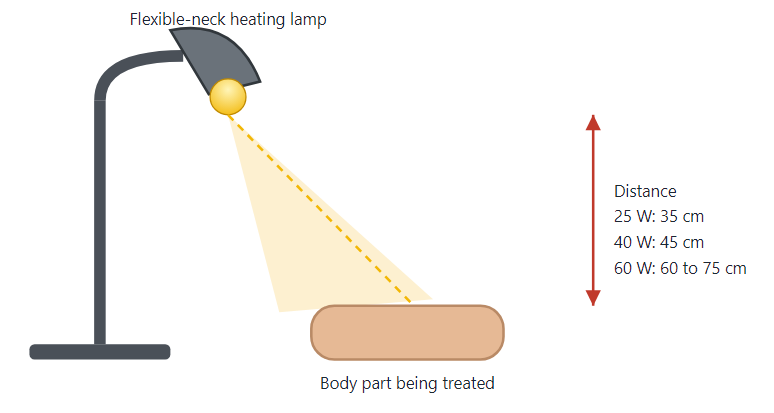
Flexible-necked lamps supply dry heat and are placed 18 to 30 inches from the area for 20 to 30 minutes. Distances: 25 W bulb, 35 cm; 40 W bulb, 45 cm; 60 W bulb, 60 to 75 cm.
Indications: to increase circulation to a small area such as a decubitus ulcer; reduce inflammation; dry casts and moist wounds; promote healing.
Articles: lamp with required voltage, measuring tape (to check distance), screen, Vaseline or oil (prevents burning), extra bed sheet (to drape).
Steps: screen and drape, wash hands, measure distance, focus the lamp at a proper angle, inspect for redness.
C. Fomentation (local moist heat)
The local application of moist heat to the skin using double thickness of flannel or other soft material. Two types: medical and surgical.
Medical fomentation (hot water with or without medicine). Purposes: stimulate circulation and relax muscle; relieve pain and congestion in an inflamed area; relieve retention of urine; stimulate absorption of serous exudate and effusion.
Articles: kettle with boiling water; two artery forceps or wringer rods in a basin; fomentation pad or two flannel pieces; cotton balls in a container with forceps; Vaseline or oil; paper bag; kidney tray; abdominal binder with safety pin; hot water bag with cover; screen.
Preliminary assessment: identify the patient, check the diagnosis and doctor’s order, inspect the body part, decide duration and frequency, check general condition and ability to follow instructions, check articles in the unit.
Preparation: explain the procedure, screen, drape and expose only the needed part, switch off the fan, place mackintosh and towel under the patient, keep the binder ready, apply oil or Vaseline on the part.
After care: change the compress every 3 minutes for 15 minutes (or remove the last one after 20 minutes if kept warm with a hot water bottle); dry the skin and look for redness and blisters (report; apply Vaseline if red); make the patient comfortable; chart date, time, kind, duration, body part treated and the patient’s reaction; wash and disinfect articles.
Remember: avoid chilling the patient between fomentations; ascertain the patient’s heat sensitivity by applying gradually.
Surgical fomentation: local moist heat needing surgical asepsis when the skin is broken. Purposes: stimulate circulation and relax muscle; reduce swelling around a wound; hasten separation of slough; help drainage of exudates.
Articles: kettle of boiling water; tray with two sterile basins, two sterile fomentation pads, two sterile forceps, two sterile small towels; plastic binder; kidney tray and paper bag; dressing trolley; screen.
Key steps: assess circulation of the area; check the order; open the dressing and observe the wound; clean the wound; pour water over the sterile pad and squeeze it with forceps; apply gently and mould around the wound; cover with sterile towels and plastic, fix with binder; check often for burns; remove after 30 minutes; apply a sterile dressing; document.
D. Sitz bath (local moist heat)
Local application of moist heat to the pelvic organs. The patient is immersed from the mid-thigh to the iliac crests. Water temperature 110 to 115 F (43 to 46 C); duration 15 to 30 minutes.
- Purposes: relieve pelvic congestion; relieve pain after cystoscopy; relieve inflammation and pain (hemorrhoids, cystitis); relieve pain in retention and painful urination; promote wound healing by cleaning off discharge and debris.
- Solutions used: potassium permanganate 1:5000; boric acid 1 dram to 1 pint; Dettol 1:40.
- Articles: screen, suitable tub or basin, jug with warm water, bedside stool.
- Procedure: explain; fill the tub about half full (the textbook starts at 100 F); screen; assist the patient to undress; stand behind the patient and help him sit with feet flat on the floor and no pressure on sacrum or thighs; make sure thighs, buttocks and lower abdomen are immersed; drape legs and wrap a blanket around the shoulders; observe for weakness or faintness and stop if pallor, rapid pulse or nausea occur; keep for 15 to 30 minutes; never leave the patient alone; help him out, dry and cover; clean articles; document.
E. General dry and moist heat
- Hot dry pack: to prevent chilling, relieve retention of urine, and provide a warm bed with blankets and hot water bottles to prevent and treat surgical shock. Wrap the patient in hot dry blankets, keep 2 to 3 hot water bottles around, give hot drinks, and apply a cold compress to the head if there is headache.
- Hot moist packs: hot moist blankets or flannel on a larger area, for example to relieve muscle spasm in poliomyelitis.
- Whirlpool or full immersion bath: promotes sedation, relieves pain and helps debridement of widespread burns; the body is buoyant so exercises need less effort.
Cold Applications
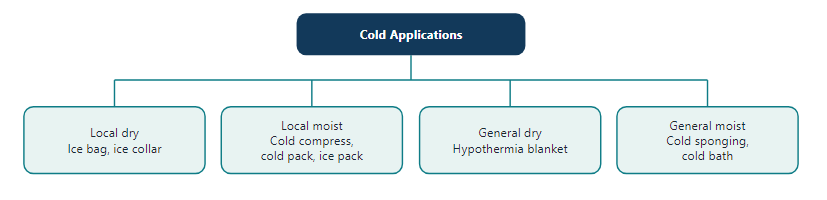
Cold application: applying a cooler agent, in moist or dry state, to the body to relieve pain or to reduce body temperature.
| Indications | Contraindications |
|---|---|
| Pain, hemorrhage, hyperthermia, edema | Shock, muscle spasm, impaired sensation, peripheral vascular disease |
Objectives of local cold application
- Relieve pain, burning or irritation; control bleeding.
- Prevent gangrene by decreasing tissue metabolism; prevent inflammation or edema.
- Inhibit bacterial growth and prevent suppuration.
- Reduce body temperature; anaesthetize an area for a short time.
Common indications: sprains and fractures; localized hemorrhage (nosebleed, hematoma); wounds, insect bites, minor burns and after injections; headache, muscle spasm, pain due to malignancy; low and moderate pyrexia; dental extractions and surgical repairs; general cold sponging.
A. Ice bag and ice collar (local dry cold)
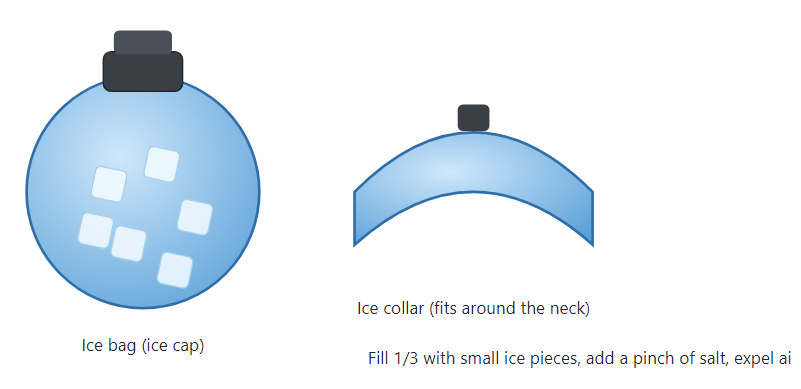
The ice bag, ice cap and ice collar apply dry cold. An ice collar is a long narrow rubber or plastic bag that fits around the neck.
Articles: big bowl (to keep ice), ice bag with cover, mackintosh with towel, tape or bandage, small container with salt, small spoon, duster, small ice cubes, kidney tray and paper bag.
| Step | Rationale |
|---|---|
| Explain; maintain a comfortable position; prevent draughts. | Gain cooperation. |
| Break the ice into small pieces. | Easy insertion. |
| Sprinkle sodium chloride (salt). | Salt lowers the melting point and prevents ice from melting. |
| Check the bag for leakage; fill about 1/3 with ice. | Makes the bag light. |
| Press out air on a flat surface; screw the cap; wipe and invert to check leakage. | The bag can be moulded to the body. |
| Put on a flannel cover. | Retains cold, allows gradual application and absorbs moisture. |
| Apply for about half an hour, then discontinue for at least an hour. | Prevents the effect of prolonged exposure to cold. |
| Chart; wash the bag with soap and water and dry; powder between the layers and store with air. | Documentation, reuse and proper storage. |
B. Cold compress (local moist cold)
Folded layers of gauze, lint or soft linen cooled over ice chips, wrung out and applied. Purposes: to treat epistaxis; to supply moist cold to the eyes; to apply on the forehead to reduce fever and headache.
Remember: do not cover a cold compress; apply for 15 to 20 minutes at a time; replace as needed; observe for numbness and mottled bluish skin.
C. Cold pack and ice pack (local moist cold)
A cold pack is a wash cloth, towel or flannel dipped in a basin of cold water with a little ice (water kept at about 75 F), wrung out and applied; replace to maintain coolness. Ice packs are plastic bags of ice covered with a towel, used to lower the temperature of a limb before surgery or to decrease swelling, and to check inflammation and suppuration by reducing blood supply.
D. Cold sponging (general moist cold)
Used to reduce temperature in a patient with hyperpyrexia. Objectives: to soothe the nerves and promote sleep; relieve discomfort; reduce temperature.
Articles: basin of water, jug of cold water, long rubber mackintosh with two bath blankets, ice with ice cap (for the head), bottle of spirit, bath towel, six sponge cloths and two treatment towels as compress, hot water bottle with cover (for the feet, to prevent unwanted effects), TPR tray, extra ice.
Key steps: check vital signs first; screen and explain; offer the bedpan; fold bed clothes to the foot and cover with a top sheet; remove clothes; place a rubber sheet and bath blanket under the patient; place an ice cap on the head; sponge the face and dry; continue sponging each part; leave sponge cloths in both axillae, both groins and a towel on the abdomen and change them after each stroke because major blood vessels are there; check vital signs again; make the patient comfortable and record. (The final steps are completed from standard practice.)
Pulse
Pulse is a wave of blood pumped into the arterial circulation by the contraction of the left ventricle.
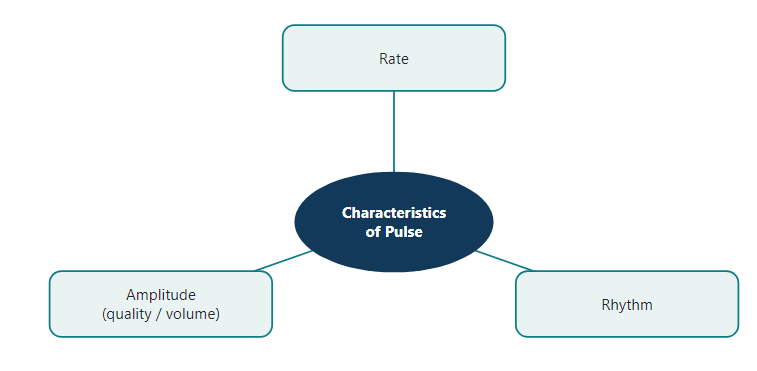
| Characteristic | Meaning |
|---|---|
| Rate | Amount of blood ejected by the heart per beat; calculated by the frequency of ventricular contraction. |
| Rhythm | The regularity of the beats: regular or irregular. |
| Amplitude (quality) | Strength of the pulse, which reflects the strength of left ventricular contraction (strong or weak). |
Physiology and regulation of pulse
The heart rate is controlled by the cardiovascular centre in the medulla oblongata. The parasympathetic (vagus nerve, cardio-inhibitory centre) slows the heart, and the sympathetic fibres (cardio-acceleratory centre) speed it up. Both act on the SA and AV nodes.
Factors affecting pulse
| Factor | Effect |
|---|---|
| Age | Pulse rate decreases with age because metabolic rate decreases. Neonates and infants have a higher rate than the elderly. |
| Sex | Women have a slightly faster rate than men. |
| Physical exercise | Increases the pulse rate. |
| Medicines | Can change rate and rhythm, for example antidepressants can raise the pulse. |
| Pain and stress | Increase adrenaline release and speed up the pulse. |
| Disease condition | Fever increases pulse because of a higher metabolic rate. |
| Obesity | Higher metabolic rate, faster pulse. |
| Blood pressure | Increase in BP decreases the heart rate. |
Assessment of pulse
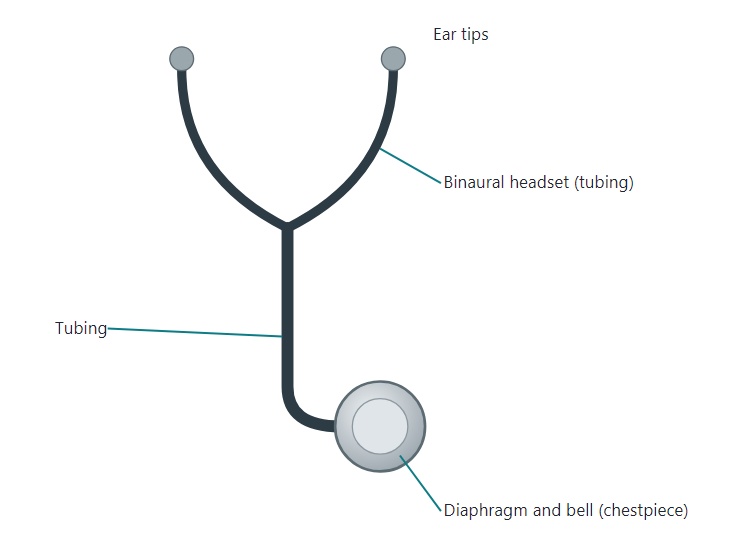
Equipment: stethoscope (earpieces, aural tube, headset or binaural tubing, diaphragm, bell and chestpiece) and a watch with a second hand.
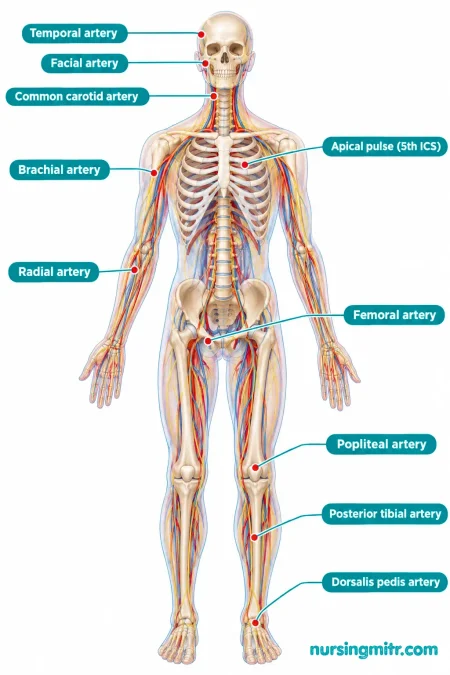
- Common peripheral sites: temporal, facial, common carotid, brachial, radial, femoral, popliteal, posterior tibial and dorsalis pedis arteries.
- Apical pulse: the preferred method for infants and children under 2 years of age. Normal pulse rate for adolescents and adults is 60 to 100 beats/min.
Technique for radial pulse (added): wash hands; position the patient comfortably with the forearm supported; place the tips of the index, middle and ring fingers lightly on the radial artery (never use the thumb); count for 30 seconds and multiply by 2 (count for a full minute if irregular); note rate, rhythm and amplitude; record.
Alterations in pulse
| Domain | Alteration | Description | Nursing action |
|---|---|---|---|
| Rate | Tachycardia | Pulse above 100/min | Teach rest; maintain patent airway; give oxygen as prescribed; report to physician |
| Bradycardia | Pulse below 60/min | Teach rest; educate about stimulants like caffeine; report to physician | |
| Rhythm | Atrial fibrillation | Incomplete atrial systole, decreased cardiac output | Correlate with ECG findings; report to physician |
| Ventricular fibrillation | Incomplete ventricular systole, decreased cardiac output, thrombi or emboli may form | Correlate with ECG; report | |
| Intermittent pulse | Heart misses beat(s) in the regular rhythm | Report | |
| Extrasystole | An extra beat between regular rhythm | Report | |
| Sinus arrhythmia | Alteration in heart rate (slower or faster) without any pathological condition | Report | |
| Volume | Bounding pulse | Full and forceful, as in a hypervolemic patient | Report to physician |
| Feeble (thready) pulse | Weak, as in dehydrated patients | Report to physician | |
| Pulsus alternans | Alternate strong and weak beats with no change in timing; mostly in heart failure | Report to physician |
Respiration
Respiration is the physical and chemical process (breathing and diffusion) by which an organism supplies its cells and tissues with oxygen for metabolism and removes the carbon dioxide formed in energy-producing reactions.
Physiology: External respiration is the exchange of oxygen and carbon dioxide between the lungs (alveoli) and the blood. Internal respiration is the exchange between the blood and the body cells, where oxygen is used in the mitochondria to make ATP. (Mechanics of breathing, added: inspiration is active as the diaphragm and external intercostal muscles contract; expiration is mostly passive.)
Age-related variation in respiratory rate
| Age | Respiratory rate (breaths/min) |
|---|---|
| Newborn | 40 to 60 |
| 1 to 3 years | 20 to 40 |
| 3 to 6 years | 16 to 30 |
| 6 to 10 years | 16 to 28 |
| 10 to 12 years | 16 to 26 |
| Adolescents and adults | 15 to 20 |
| Elderly | 15 to 20 |
Factors affecting respiration
| Factor | Effect |
|---|---|
| Exercise | Increases rate and depth. |
| Emotions and pain | Alter rate and rhythm. |
| Medications | Opioids like morphine decrease the respiratory rate. |
| Trauma | Raised intracranial pressure depresses the respiratory centre and decreases the rate. |
| Infections | May alter the rate and depth. |
| Respiratory and cardiovascular disease | Increase carbon dioxide and decrease oxygen, so the rate increases (for example pneumonia). |
| Body posture | Semi-Fowler’s or Fowler’s position allows lung expansion. |
| Neurological injury | Brainstem injury inhibits respiration. |
| Blood pressure | As BP rises, respiratory rate decreases. |
Assessment of respirations
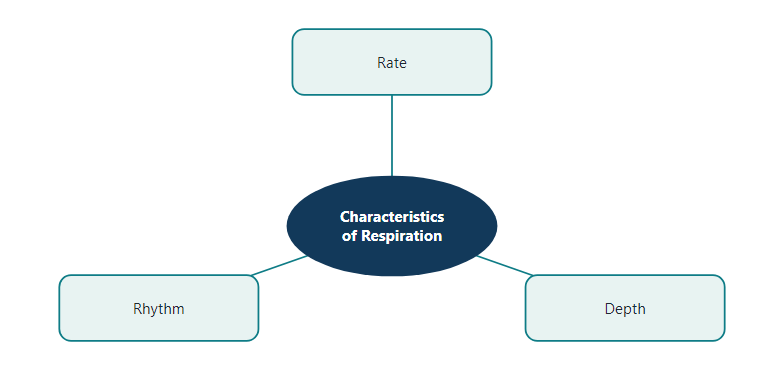
The nurse assesses rate, depth and rhythm by inspection (observing and listening) or by listening with a stethoscope. Other methods: pulse oximeter for oxygenation and arterial blood gas results. (Technique, added: count respirations for a full minute without telling the patient, while keeping the fingers on the wrist as if still counting the pulse, so that breathing is not changed consciously.)
Alterations in respiration (definitions added from standard sources)
| Alteration | Meaning |
|---|---|
| Tachypnea | Rapid breathing, above 20/min in adults. |
| Bradypnea | Slow breathing, below 12/min in adults. |
| Apnea | Absence of breathing. |
| Dyspnea | Difficult or laboured breathing. |
| Orthopnea | Breathing is possible only in an upright position. |
| Hyperventilation | Increased rate and depth of breathing. |
| Kussmaul breathing | Deep, rapid breathing seen in diabetic ketoacidosis. |
| Cheyne-Stokes breathing | Cycles of increasing and decreasing depth followed by apnea. |
| Agonal breathing | Gasping, irregular breaths near death. |
Arterial oxygen saturation (SpO2)
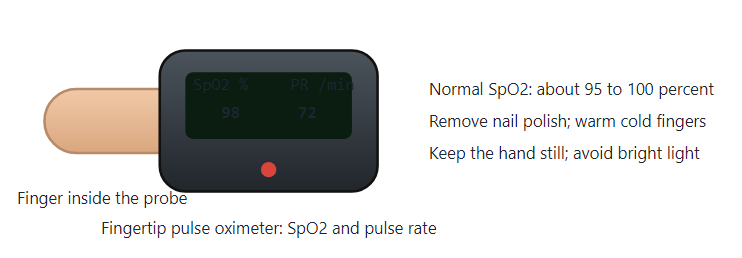
Monitored by a pulse oximeter, a non-invasive and painless test. SpO2 is the percentage of all hemoglobin binding sites occupied by oxygen. (Normal is about 95 to 100 percent, added.) Factors affecting SpO2 reading: light, circulation, activity, carbon monoxide poisoning. Types of pulse oximeter: forehead sensor, fingertip, ear sensor, table-top and hand-held.
Blood Pressure
Blood pressure is the force of the moving blood against arterial walls. Maximum pressure is exerted on the arterial walls when the left ventricle contracts and pushes blood through the aortic valve into the aorta at the beginning of systole.
Normal blood pressure by age
| Age | Female | Male |
|---|---|---|
| 15 to 18 | 117/77 | 120/85 |
| 19 to 24 | 120/79 | 120/79 |
| 25 to 29 | 120/80 | 121/80 |
| 30 to 35 | 122/81 | 123/82 |
| 36 to 39 | 123/82 | 124/83 |
| 40 to 45 | 124/83 | 125/83 |
| 46 to 49 | 126/84 | 127/84 |
| 50 to 55 | 129/85 | 128/85 |
| 56 to 59 | 130/86 | 131/87 |
| 60+ | 134/84 | 135/88 |
(All values in mm Hg.)
Physiology and characteristics of blood pressure
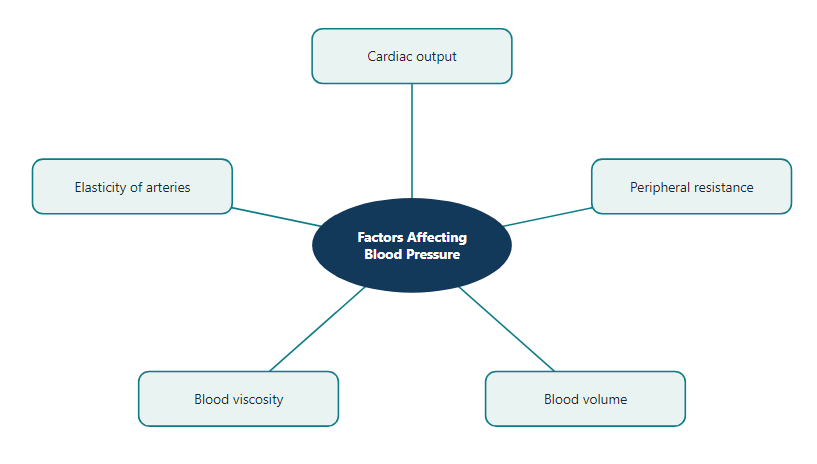
| Determinant | Effect |
|---|---|
| Cardiac output | More blood pumped by the heart raises cardiac output and BP. |
| Peripheral resistance | Directly affects BP. Vasoconstriction or obstruction raises it. |
| Blood volume | Directly proportional to BP: increased volume raises BP, decreased volume lowers it. |
| Viscosity | The percentage of RBCs in blood. Higher viscosity raises BP. |
| Elasticity of arteries | Pressure rises during contraction and falls during relaxation. Loss of elasticity changes BP. |
Factors affecting BP: exercise, stress, medications, age, diurnal variations, disease conditions, blood volume, temperature.
Korotkoff sounds

Phase 1, the first tapping sound during deflation, is commonly used for the systolic reading. Phase 5, the last sound followed by silence, is the diastolic reading.
Sites and method of assessing BP
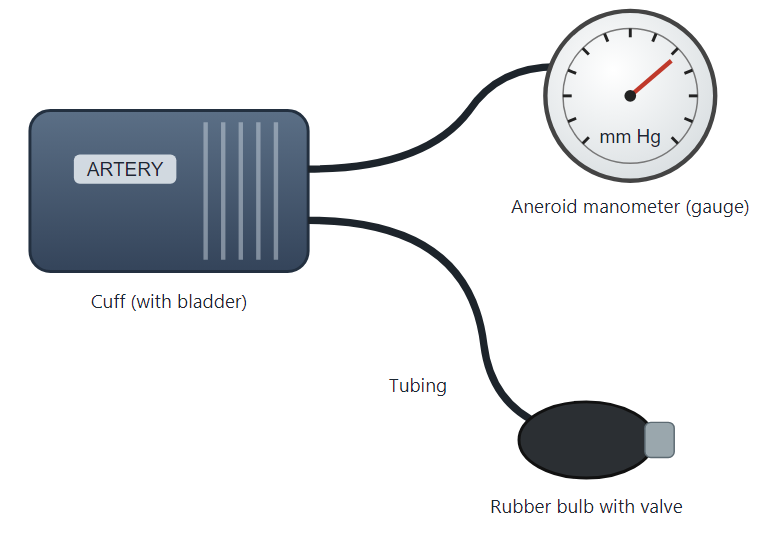
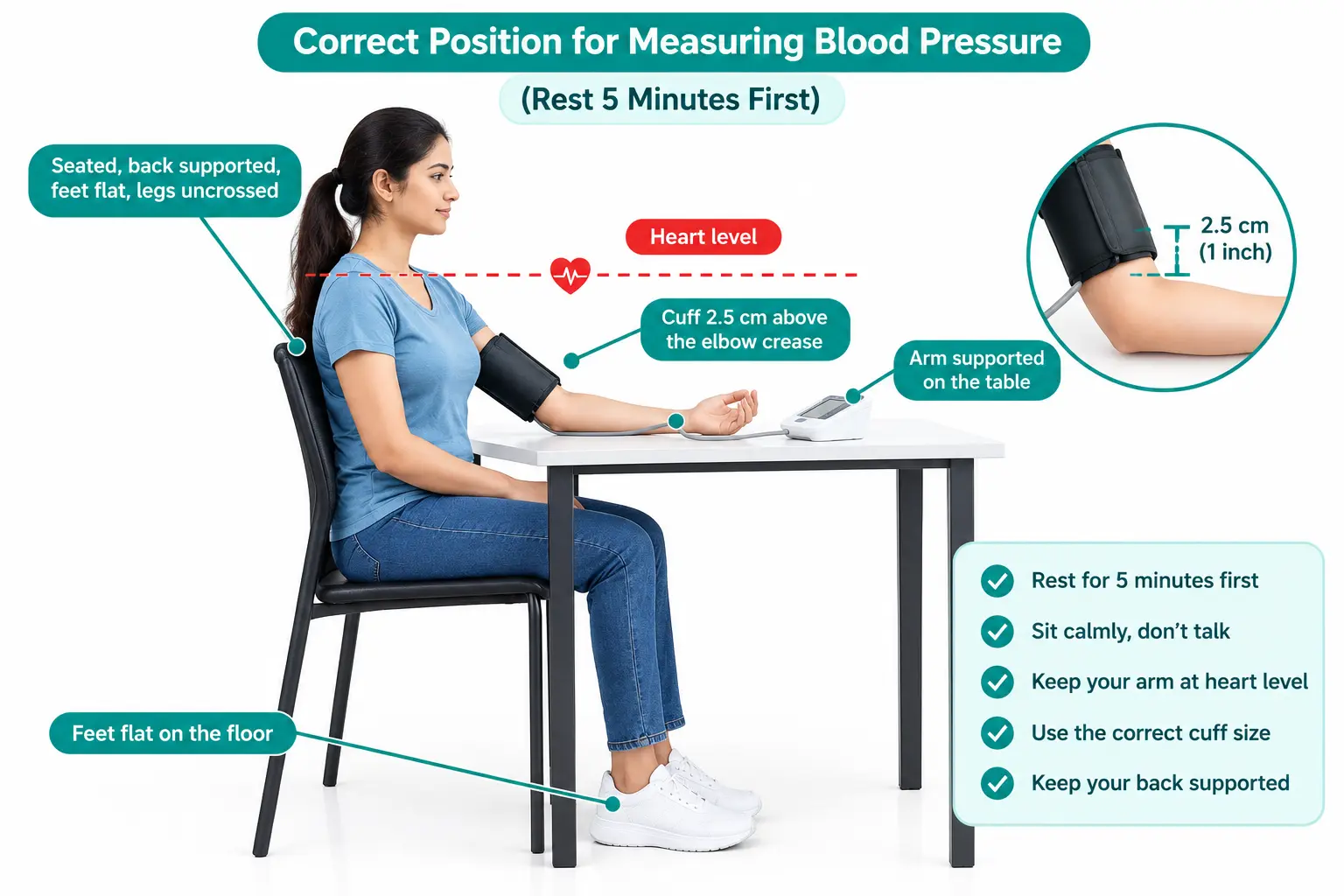
BP can be measured over the brachial artery (most common), radial artery or popliteal artery. Technique for brachial BP (added): patient seated or lying, rested for 5 minutes, arm supported at heart level; apply a properly sized cuff 2.5 cm above the elbow crease; palpate the brachial pulse; place the stethoscope diaphragm over it; inflate until about 30 mm Hg above the point where the pulse disappears; deflate slowly at 2 to 3 mm Hg per second; note the first sound (systolic) and last sound (diastolic); deflate completely; wait 1 to 2 minutes before repeating; record.
Special considerations (faulty readings)
| Faulty HIGH reading | Faulty LOW reading |
|---|---|
| Bladder cuff too narrow; arm hanging without support; inadequate rest before assessment; cuff wrapped too loosely; deflated too slowly. Increased hematocrit also gives a higher BP. | Bladder cuff too wide; arm above the level of the heart; deflated too quickly. |
Hypertension
- One of the most common health problems, also known as the silent killer.
- Occurs when BP is above normal for a sustained period. As per the chapter, hypertension is diagnosed when systolic BP is 130 mm Hg or higher or diastolic BP is 80 mm Hg or higher.
| Prehypertension | Hypertension stage 1 | Hypertension stage 2 |
|---|---|---|
| 130 to 139 / 80 to 89 | 140 to 159 / 90 to 99 | 160 or more / 100 or more |
Note: different guidelines (WHO, Indian guidelines, ACC/AHA) use slightly different cut-offs, so always follow the classification in your textbook for exams.
Risk factors: history of hypertension, aging, obesity, hypercholesterolemia, lifestyle risk factors, metabolic disorders, sleep apnea.
Medical management: antihypertensive drugs, such as diuretics (decrease fluid volume), beta-adrenergic blockers (block sympathetic stimulation and decrease cardiac output), vasodilators and calcium channel blockers (relax arteriolar smooth muscle and decrease peripheral resistance).
Hypotension
Occurs when BP is lower than 90/60 mm Hg, mainly when the body’s control mechanisms cannot maintain BP due to a pathology such as hemorrhage.
Nursing diagnosis: Ineffective peripheral tissue perfusion related to hypotension as evidenced by BP changes in extremities.
Interventions: assess BP for a baseline; promote non-rapid ambulation (raise the head of the bed, then sit the patient at the bedside for a few minutes to check for dizziness, then stand; if dizzy, lay the patient supine to restore blood flow to the brain); give antihypertensives at bedtime if possible; ensure adequate hydration; give medicines to raise BP as prescribed.
Post-procedural responsibilities after monitoring BP
| Nurse | Patient | Environment |
|---|---|---|
| Document and report the findings; explain the findings to the patient; replace used articles; wash hands. | Assist the patient to a comfortable position. | Tidy the bed linen; provide a calm and quiet environment. |
Documentation and Recording of Vital Signs
Vital signs are recorded on the graphic chart (TPR chart), where temperature, pulse and respiration are plotted over time as a graph, and BP is written in the space provided. Record the date, time and your signature, record immediately after measuring, circle or mark abnormal values, and report any abnormality to the doctor or nurse in charge.
Quick Revision Points
- Normal values (adults): temperature 36.5 to 37.5 C, pulse 60 to 100/min, respiration 15 to 20/min, BP about 120/80 mm Hg, SpO2 95 to 100 percent.
- Hypothalamus is the temperature regulation centre. Heat loss: conduction, convection, radiation, evaporation.
- Fever types: intermittent (malaria), remittent, relapsing, constant (typhoid), inverse, rigor.
- Heat cramps, heat exhaustion, heat stroke. Hypothermia: mild 90 to 95 F, moderate 82.4 to 90 F, severe below 82.4 F.
- Hot applications: hot water bottle, heating lamp, fomentation, sitz bath. Cold: ice bag, cold compress, cold pack, cold sponging.
- Pulse: rate, rhythm, amplitude. Tachycardia above 100, bradycardia below 60.
- BP: Korotkoff phase 1 is systolic, phase 5 is diastolic. Cuff too narrow gives falsely high reading.
Vital Signs MCQs
Q1. Vital signs include:
- Temperature, pulse, respiration, blood pressure
- Height and weight only
- Blood tests
- Urine tests
Answer: A. SpO2 is also commonly recorded.
Q2. Normal core body temperature range is:
- 34 to 35 C
- 36.5 to 37.5 C
- 38 to 39 C
- 39 to 40 C
Answer: B. Surface temperature is 97 F to 99 F (36.1 to 37.2 C).
Q3. Body temperature is the balance between:
- Heat production and heat loss
- Pulse and respiration
- Food and water
- Sleep and activity
Answer: A. Controlled by the hypothalamus.
Q4. Which is a method of heat loss?
- Shivering
- Radiation
- Thyroxine
- Basal metabolic rate
Answer: B. Others: conduction, convection, evaporation.
Q5. Heat loss by movement of warm air away from the body is:
- Conduction
- Convection
- Radiation
- Evaporation
Answer: B. Example: warm air moving to cooler places.
Q6. Heat loss through sweating is:
- Conduction
- Convection
- Radiation
- Evaporation
Answer: D. Sweating and evaporation.
Q7. Neonates and the aged are more prone to:
- Hyperthermia
- Hypothermia
- Hypertension
- Tachycardia
Answer: B. They cannot maintain body temperature well.
Q8. Progesterone in women raises body temperature during ovulation by about:
- 0.1 F
- 0.5 to 1.0 F
- 3 F
- 5 F
Answer: B. Hormonal level.
Q9. Which drug class may lower body temperature?
- Beta blockers
- Thyroid hormone
- Caffeine
- Steroid ointment
Answer: A. Thyroid hormone drugs may raise it.
Q10. The most accurate and commonly used temperature types of thermometer include all EXCEPT:
- Glass thermometer
- Digital thermometer
- Tympanic thermometer
- Stethoscope
Answer: D. The stethoscope is used for pulse, apical rate and BP.
Q11. Fever is caused by:
- Pyrogens raising the hypothalamic set point
- Only exercise
- Only dehydration
- Only anxiety
Answer: A. Bacteria, viruses and tissue injury chemicals.
Q12. Fever in which temperature fluctuates daily with periods of normal and is common in malaria is:
- Intermittent
- Remittent
- Relapsing
- Constant
Answer: A. Typhoid shows constant fever.
Q13. Remittent fever shows a difference of morning and evening temperature of more than:
- 0.5 C
- 1 C
- 2 C
- 5 C
Answer: C. It never comes to the normal range.
Q14. Fever with temperature higher in the morning than evening is:
- Inverse fever
- Remittent fever
- Rigor
- Constant fever
Answer: A. Opposite of the usual pattern.
Q15. Hyperpyrexia is a temperature above:
- 38 C
- 39 C
- 40 C
- 41.1 C (106 F)
Answer: D. As per the type of fever slide.
Q16. Acute fever lasts:
- Less than 7 days
- Up to 14 days
- More than 14 days
- More than 30 days
Answer: A. Sub-acute is up to 14 days; chronic is more than 14 days.
Q17. During the cold stage of rigor, the nurse should:
- Provide blankets and hot drinks
- Remove all clothing
- Give cold sponging
- Stop vitals
Answer: A. Also restrict activity and monitor vitals.
Q18. During the hot stage of fever, the nurse should:
- Remove extra clothing, give cold fluids and tepid sponging
- Give more blankets
- Give hot drinks
- Ignore the patient
Answer: A. Antipyretic as prescribed.
Q19. Painful muscle cramps and profuse sweating indicate:
- Heat cramps
- Heat stroke
- Hypothermia
- Fever
Answer: A. Due to dehydration and less sodium.
Q20. Hot, dry skin above 104 F with loss of consciousness suggests:
- Heat cramps
- Heat exhaustion
- Heat stroke
- Fever
Answer: C. Failure of thermoregulation.
Q21. Moderate hypothermia is a body temperature of:
- 90 to 95 F
- 82.4 to 90 F
- Below 82.4 F
- Above 98 F
Answer: B. Severe is below 82.4 F.
Q22. Shivering and increased respiratory rate are signs of:
- Mild hypothermia
- Severe hypothermia
- Fever
- Heat stroke
Answer: A. Temperature 90 to 95 F.
Q23. Hot water bottle should be filled to about:
- Full
- 1/3 to 1/2 or 2/3 of capacity as per the textbook (1/2 to 2/3)
- Empty
- Only ice
Answer: B. Expel air and cork tightly.
Q24. Distance of a 40 watt heating lamp from the body part is:
- 35 cm
- 45 cm
- 60 to 75 cm
- 100 cm
Answer: B. 25 W is 35 cm; 60 W is 60 to 75 cm.
Q25. Duration of treatment with a heating lamp is:
- 5 to 10 minutes
- 20 to 30 minutes
- 1 hour
- 2 hours
Answer: B. Distance 18 to 30 inches.
Q26. A fomentation uses double thickness of:
- Flannel or soft material
- Plastic
- Paper
- Foam
Answer: A. Medical and surgical types.
Q27. Surgical fomentation requires:
- Surgical asepsis
- Hot water bottle only
- No preparation
- Ice
Answer: A. Used when the skin is broken.
Q28. Sitz bath immerses the patient from:
- Neck to toes
- Mid-thigh to iliac crests
- Only the feet
- Only the hands
Answer: B. Water 110 to 115 F, 15 to 30 minutes.
Q29. Which is a contraindication of hot application?
- Muscle stiffness
- Open wounds
- Menstrual cramps
- Pain
Answer: B. Also cancer, paralysis, impaired organ function, very young and very old.
Q30. Which is an indication of cold application?
- Hemorrhage
- Open wound infection
- Shock
- Impaired sensation
Answer: A. Also pain, hyperthermia, edema.
Q31. Ice bag is a type of:
- Local dry cold
- Local moist cold
- General dry cold
- General moist cold
Answer: A. Cold compress is local moist.
Q32. A cold compress should be applied for:
- 15 to 20 minutes
- 2 hours
- 1 minute
- All night
Answer: A. Do not cover it.
Q33. Pulse is a wave of blood created by contraction of the:
- Right atrium
- Left ventricle
- Right ventricle
- Aorta
Answer: B. Felt in arteries.
Q34. Normal adult pulse rate is:
- 40 to 60/min
- 60 to 100/min
- 100 to 140/min
- 140 to 180/min
Answer: B. Apical pulse is preferred in children under 2 years.
Q35. Pulse rate above 100/min is:
- Bradycardia
- Tachycardia
- Normal
- Arrhythmia
Answer: B. Bradycardia is below 60/min.
Q36. A weak thready pulse occurs in:
- Dehydration
- Hypervolemia
- Exercise
- Anxiety
Answer: A. Bounding pulse is seen in hypervolemia.
Q37. Alternation of one strong and one weak beat is:
- Pulsus alternans
- Extrasystole
- Sinus arrhythmia
- Bounding pulse
Answer: A. Seen in heart failure.
Q38. Normal respiratory rate of adults is:
- 6 to 10/min
- 15 to 20/min
- 30 to 40/min
- 40 to 60/min
Answer: B. Newborn is 40 to 60/min.
Q39. Which factor decreases the respiratory rate?
- Morphine
- Exercise
- Fever
- Pain
Answer: A. Opioids depress the respiratory rate.
Q40. SpO2 is measured with a:
- Pulse oximeter
- Sphygmomanometer
- Thermometer
- Stethoscope
Answer: A. Non-invasive and painless.
Q41. Which factor affects pulse oximeter reading?
- Carbon monoxide poisoning
- Eye colour
- Hair length
- Age of the machine only
Answer: A. Also light, circulation and activity.
Q42. Blood pressure is the force of blood against:
- Arterial walls
- Venous valves
- Capillary beds only
- Lymph nodes
Answer: A. Highest during systole.
Q43. First tapping sound during cuff deflation (Korotkoff phase 1) indicates:
- Systolic BP
- Diastolic BP
- Pulse pressure
- MAP
Answer: A. Phase 5 gives diastolic BP.
Q44. A too narrow BP cuff gives a:
- Falsely high reading
- Falsely low reading
- Correct reading
- No reading
Answer: A. A too wide cuff gives a falsely low reading.
Q45. Hypotension is BP lower than:
- 120/80
- 100/70
- 90/60
- 80/50
Answer: C. As per the chapter.
Q46. When ambulating a hypotensive patient after surgery, the nurse should first:
- Raise the head of the bed and sit the patient at the side
- Make the patient run
- Lower the head
- Stand the patient quickly
Answer: A. Prevents dizziness.
Q47. Hypertension is also known as:
- Silent killer
- Sudden death
- Fast pulse
- Fever of the heart
Answer: A. Often has no symptoms.
Vital Signs Important Questions as per INC Syllabus Pattern
Long answer questions (10 to 15 marks)
- Describe the regulation of body temperature and the factors affecting it.
- Define fever. Explain the types, stages and nursing management of fever.
- Describe the procedure of hot water bottle application with rationale.
- Describe the procedure of cold sponging.
- Explain the physiology, characteristics, assessment and alterations of pulse.
- Define respiration. Explain the factors affecting respiration and alterations in respiration.
- Explain the physiology, factors, assessment and alterations of blood pressure. Describe the nursing management of hypertension and hypotension.
Short answer questions (5 marks)
- Heat production and heat loss
- Types of fever
- Heat cramps, heat exhaustion and heat stroke
- Hypothermia: types and management
- Indications and contraindications of hot and cold applications
- Sitz bath
- Fomentation
- Ice bag application
- Characteristics of pulse
- Alterations in pulse
- Pulse oximeter
- Korotkoff sounds
- Faulty BP readings
Very short answer questions (2 marks)
- Define body temperature.
- Write the normal range of core temperature.
- Name four sites of temperature measurement.
- Define hyperpyrexia.
- Define tachycardia and bradycardia.
- Define apnea.
- Define blood pressure.
- What is the silent killer?
- Write the formula to convert Celsius to Fahrenheit.
- Name two contraindications of hot application.
Also read:
CHAPTER 1: Introduction to Health and Illness, Nursing Foundation Unit 1 Notes PDF
CHAPTER 2: Health Care Delivery System, Nursing Foundation Unit 2 BSc Nursing Notes
Chapter 3: Nursing as a Profession and History of Nursing in India: BSc Nursing 1st Semester Notes (Nursing Foundation)
CHAPTER 4: Hospital Admission and Discharge: Complete BSc Nursing Notes | 1st Semester Notes (Nursing Foundation)
CHAPTER 5: Communication and Nurse Patient Relationship: Complete Notes | BSc Nursing 1st Semester Notes (Nursing Foundation)
Chapter 6: Patient Education in Nursing: Notes for BSc Nursing 1st Semester, Nursing Foundation Notes with MCQs & Important Questions
Chapter 7: The Nursing Process: Complete Notes for BSc Nursing, 1st Semester, Nursing Foundation
Chapter 8: Documentation and Reporting: Notes with MCQs and Important Questions for BSc Nursing 1st Year, Nursing Foundation Notes